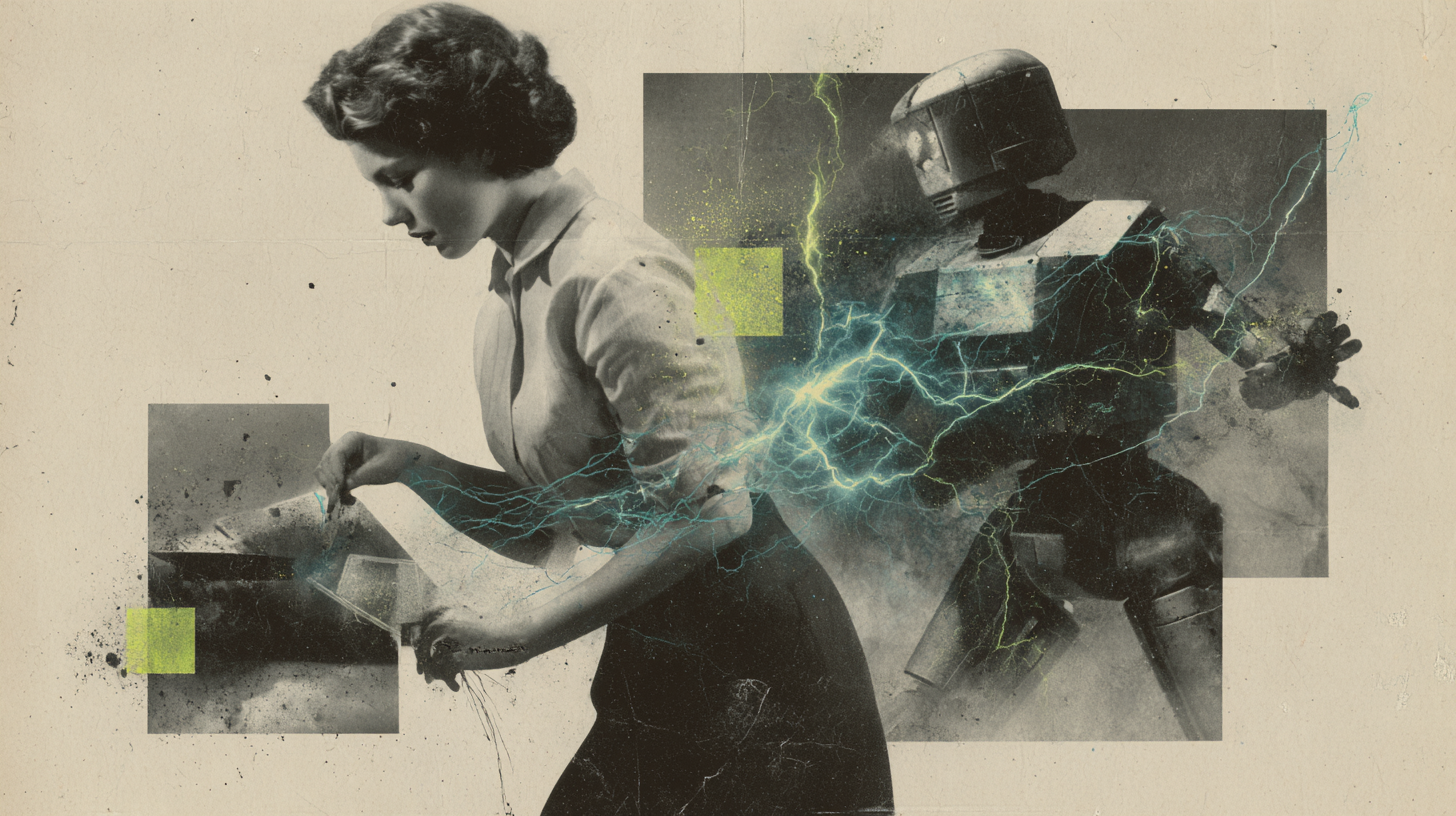

AI is reshaping entire industries in years, not decades. What took steam power 80 years to accomplish, AI is doing in less than 10. We’ve entered the Fourth Industrial Revolution, and like every transformation before it, most people are missing the real opportunity.
Throughout history, certain moments have accelerated human progress at unprecedented speeds. Each industrial revolution didn’t just introduce new tools—it fundamentally expanded human capabilities.
The First Revolution freed us from geographical constraints on power. Steam engines didn’t just replace horses; they enabled transcontinental railways that were previously impossible. Society reorganized around this new reality.
The Second Revolution changed how humans think about time and space. Electricity didn’t just bring light—it allowed factories to run 24/7, cities to extend beyond daylight hours, and people to communicate instantly across vast distances. Assembly lines didn’t just speed up production; they proved that complex tasks could be broken into optimizable components.
The Third Revolution expanded our memory and computational abilities. Computers didn’t just store information faster—they enabled us to process complexity that human minds couldn’t handle alone. The internet didn’t just connect devices; it created a global nervous system for human knowledge.
Now AI is changing the game again, accelerating the pace of everything we do. Just like every generation before us, we don’t know where this change will end or what will trigger a fifth revolution.
The Noise Problem
There’s a lot of confusion right now. Companies are rushing to add “AI-powered” labels without asking fundamental questions: Does this AI actually solve a problem, or are we just solving for the AI?
People are chasing “generative” and “agentic” because those are the buzzwords, but they don’t understand what these capabilities really enable. When a project management tool adds AI just to generate meeting summaries, but teams still spend 30 minutes in status meetings, what problem did we really solve?
Soon everyone will be wrapped up in discussions about model context and memory capabilities. It’s already starting. But the technology specs aren’t the revolution—how we integrate these tools into human workflows is.
We Need Thoughtful Explorers
Every revolution has its explorers—not necessarily those building the tools, but those figuring out how to best incorporate them into reality. Just like the first steamships that crossed oceans, there will be AI explorers pushing boundaries and discovering new possibilities.
These AI pioneers aren’t just early adopters—they’re pattern recognizers. They understand that every powerful technology follows a similar path: initial hype, then disillusionment, then practical transformation. The steam engine wasn’t revolutionary because it was steam-powered; it was revolutionary because it freed humans from geographical constraints on power generation.
The bravest explorers will be those who aren’t afraid to say that AI doesn’t need to be part of everything, but instead champion exactly what it should revolutionize.
Every company is excited to slap “AI-powered” onto their technology, but what does it really provide an advantage for? What about the consultants and agencies claiming to be “AI native” or “experts,” only to be following tutorials and expecting to pass insights to you?
Real AI augmentation looks different. Instead of manually categorizing 100 customer emails, AI handles the sorting while you focus on complex relationship management. Instead of spending 2 hours building a workflow, AI helps you prototype in 20 minutes, then you invest your brain power optimizing the business logic.
The right question isn’t “How can we add AI?” but “What human potential can AI unlock?”
The Real Opportunity
The problem is that people spend so much time chasing trends instead of understanding capabilities. They’re solving for the technology rather than solving with the technology.
What you should be asking is: What tools can actually remove small burdens and allow you to think your best thoughts? How can AI augment your workflow to make you better, or your company more effective?
The Fourth Revolution Winners
The Fourth Industrial Revolution won’t be won by those who use the most AI—it’ll be won by those who use AI most thoughtfully.
Just as the steam engine’s real power enabled transcontinental railways that were previously impossible, AI’s real power isn’t replacing human thinking—it’s enabling types of human thinking that were previously impossible. It’s about expanding human cognitive capabilities, not replacing them.
The explorers of this revolution will be those brave enough to say no to AI theater and yes to AI transformation. They’ll understand that like every revolution before it, the real change isn’t in the technology itself—it’s in how it fundamentally reshapes what humans can accomplish.
The question isn’t whether AI will change everything. The question is whether you’ll be thoughtful enough to harness that change, or whether you’ll just get swept along by the hype.